The Basics Of Icon Design:

http://bit.ly/35ed5vu

Icons are clever little plans that add flavor to your pages while guiding clients to various zones of intrigue. While most sites don’t require a huge amount of symbols, they do ordinarily require a few and making these apparently straightforward structures can be significantly more confounded than you might suspect.

Why Use Icons:

Symbols are utilized in the plan of your site pages to add a visual component to your substance. While many sections of content will in the end get exhausting and a peruser will lose enthusiasm, by adding symbols to separate and complement the content you can keep your perusers consideration longer.

They are additionally utilized in places like the header of a page, the chapter by chapter guide, in item records, and in the spot of normal visual cues. Utilized in these spot, symbols add appeal to your content and feature what you are selling or saying.

Symbols can go far in making a site look and feel proficient from the absolute first look. They show your perusers that you care about even the little subtleties of your business. At the point when structured effectively, they add to your site, not occupy from it, and they ought to be made to accept circumstances for what they are and feel of your site and other organization illustrations to add to mark acknowledgment.

Making Your Own Icon:

Making your own symbol configuration may appear to be a basic assignment, they’re so little right? Wrong. To structure these little realistic subtleties, it takes a ton of thought and plan information. Regularly they are planned in projects, for example, Adobe Illustrator or Photoshop. In the event that you don’t know about these or a comparative structure programming, at that point planning a symbol yourself may not be conceivable.

Free Icons:

Exclusive service on fiverr By madebymatt
http://bit.ly/35ed5vu

One alternative to getting symbols without really structuring them yourself is to download them for nothing. There are various site that offer free symbols for download. For instance a site like offers thousands that you can download for nothing and use with different PC frameworks. In any case, there are a couple of gets to getting them thusly.

Numerous locales that offer free symbols make you offer credit to the site on your website page where it is utilized. Others enable you to download the symbols for individual use, yet make you pay a permit charge in the event that you intend to utilize them in a business path like on a site. At long last, as other structure components, for example, logos, everybody approaches a similar free alternatives that you approach. This implies they are most likely being utilized by numerous other individuals and aren’t custom or unique to your site.

Custom Icon Design:

On the off chance that you don’t have the plan abilities or the product to structure your own, and you would prefer not to utilize the free ones that every other person approaches, a great choice for you is to work with a structure administration to get custom symbols planned.

This sort of administration is decent in light of the fact that you won’t have symbols like any other person, you won’t need to offer credit to another site on your web page, and you can get explicit symbol structures that match the careful feel of your site and brand. Know more visit the official website http://bit.ly/35ed5vu

How To Turn a Hand Drawn Logo Into a Vector:

http://bit.ly/2ZGj7pQ

A hand-drawn logo can be the ideal fit for the correct venture. Ever considered how to begin with a logo sketch and end with a vector design logo? Today I’m going to share my procedure on how I make a completed vector hand-represented logo, without any preparation.

The procedure appeared here offers an extremely old school approach, and will convey a completed item with a legitimate hand created look and feel. These techniques are just a single way, and surely aren’t the best way to do it. There are a lot of elective strategies and applications accessible today.

Disclosure:

Since you’re perusing this article close by delineated logos, it is entirely protected to expect you as of now have the hand-outlined style as a top priority. Past the essential style, there are extra inquiries to consider as you conceptualize the conceivable outcomes.

On the off chance that you have a customer venture, I suggest talking about with the customer and truly attempting to get profoundly of their needs and aims for the logo and their image. This article for the most part centers around the procedure to go from sketch to vector design, yet underneath is a rundown of inquiries to kick you off on setting up a course for the logo.

Having a few nuts and bolts as a main priority when you begin to handle the task will enable you to set out on a course when your hand gets going in the subsequent stage.

Conceptualizing:

One straightforward technique to conceptualize an assortment of ideas is to rapidly portray a huge number of little thumbnail style ideas. The motivation behind this is to conceptualize various ideas, not refine the last form.

  • Abstain from getting made up for lost time with subtleties or refining a lot as this can slow the procedure and restrain the progression of thoughts. No thought is a poorly conceived notion at this stage. Try not to pass judgment on yourself, simply sketch.
  • Here are some conceptualizing representation pointers
  • Trial with all tops content, intense content, italic content, cursive content, and so forth.
  • Have a go at inclining the content, or drawing the content on a bended benchmark.
  • Examination with various fundamental shapes.
  • Examination with where various components are set and how they are adjusted.
  • In the event that you have any famous shapes, what assortments of the shape would you be able to outline?

Consider subtracting and covering shapes:

When you have settled on a simple portrayal to grow further, draw a bigger rendition of your preferred logo that permits space for better subtleties and greater refinement (see above picture). The objective here is to draw a progressively refined logo that is reasonable for following in the subsequent stage.

Haul out a sheet of your following paper and tape it over your last sketch. As you follow your outline with a pen on the following paper, remember that we are going for the hand represented look. Blemishes are welcome.

I purposefully let my hand meander a piece as I follow over the sketch to misrepresent the hand created look and feel. To rapidly fill in the logo I likewise prefer to utilize a thicker dark marker once my outside lines have been followed.

Sweep:

In this progression we will check the wrote logo following into the PC. In the event that you don’t have a scanner, make a hurried to the neighborhood Kinko’s or get a companion’s scanner for this progression. A telephone camera could work after all other options have been exhausted, yet I don’t prescribe it.

Output Settings:

Most scanners offer a huge number of choices. Every scanner will fluctuate, however you essentially need to utilize an output preset that enables you to check in bitmap high contrast for the most straightforward conceivable determination in the subsequent stage.

For logos, I commonly prefer to sweep utilizing the “Content” setting on my scanner. This setting may appear to be outlandish, however it makes the transformation to vector configuration considerably simpler as it filters in just highly contrasting, no shades of dim.

The general principle guideline is the higher the goals, the better. In the event that you have a filtered logo something to the tune of 3,000px – 5,000px wide or somewhere in the vicinity, you ought to be fit as a fiddle for the accompanying advance. An output that is too low a goals is too be stayed away from.

Convert to Vector:

Exclusive service on fiverr By mohamedhalabi

http://bit.ly/2ZGj7pQ

Now all the while, we will change over the sketch from a bitmap picture to the business standard vector record group (with ways). Dispatch Adobe Illustrator and open the picture record you just checked. At the point when the report opens, you’ll see your sweep (see above picture).

In any case, what you see now is just bitmap picture sitting in an Illustrator report, and won’t do as a last logo position. We have to change over this picture to genuine vector ways inside Illustrator.

Artist follow sketch:

Snap legitimately on the logo to choose the bitmap picture and afterward select “Article > Image Trace > Make and Expand”. This will probably trigger an Illustrator cautioning popup saying that the procedure may continue gradually. Snap the “alright” catch to continue. When the procedure completes you’ll have a real vector logo!

The majority of the little red specks in the above picture are the focuses along the vector way, and just show while altering the record in Illustrator. Know more visit the official website http://bit.ly/2ZGj7pQ

Finally, I prescribe erasing any pointless ways utilizing the Layers palette. To do this grow the layer in the “Layers” palette, find any unused layers, and erase them (see beneath picture). This will keep your logo document clean and wipe out any muddled and unused curios.

Clip Art Including Royalty Free Backgrounds, Borders And Graphics

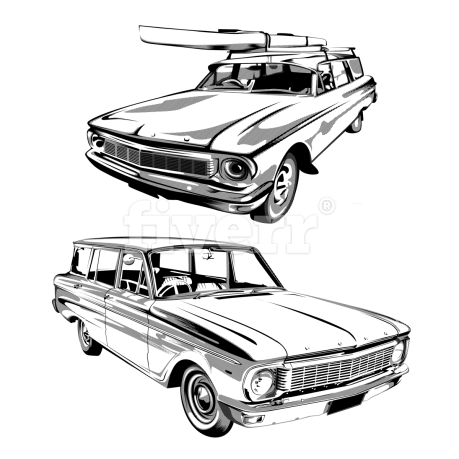
Clip Art has been utilized in numerous forms since the center of the last century. “Spot Illustrators” were employed by print publications, ad agencies, then forth within the 1930’s, 1940’s and 1950’s and into the 1980’s to form fast, black and white visuals to accompany advertisements, articles, forums, short stories and alternative literary works that required a graphic component to assist draw the reader in.

The earliest and most well liked medium wont to produce computer graphics was pen and ink. Pen and ink or “Line Art” drawings, were created even as the name implies, with a dip or “nib” pen Associate in Nursingd an well crammed with black ink. The Artist, let’s decision him “Art Guy”, would dip his pen into the well, faucet the excess of ink on the rim of the bottle and employing a steady hand, begin to draw his or her illustration. A top quality stock paper with a swish end, including generally vellum, was and still is that the selection of most artists. Some artists most popular to draw their subject material with a pencil initial to form a “template” within which to use the ink on prime of.

Once the illustration was complete, it absolutely was left to dry on its own. To dry the ink additional quickly, some artists used “Pounce” that could be a fine powder wet meagrely over the wet illustration. Pounce powder are often created employing a style of materials together with sand, soapstone, talc and even finely ground salt. Pounce is additionally employed by calligraphers.

Once the illustration was dry, it absolutely was given to the Stat photographer and photographed in an exceedingly room to form film from the camera-ready design. Shaded or “half tone” black and white pictures may be created from the all-black art victimization numerous dot pattern filters and so transferred to paper. victimization this method, endless copies of the first design may be created, very similar to the electronic copy machines fictional several decades later. The paper copies were then cut and “cut to size” in preparation for the publication method and so “Art Guy” headed to the assembly area to try to to his cool “layout” thing!

“Layouts” were created by combining text and pictures in an exceedingly pleasing manner and adhering the assorted objects to dominated paper. the principles helped the assembly creator align the photographs each horizontally and vertically. written victimization blue ink, the principles couldn’t be photographed, thereby rendering the principles invisible within the final written publication. Adhering the text and pictures to the dominated paper was accomplished by employing a style of strategies. social unit glues were a typical selection, however within the 1940’s bees wax became well-liked.

Electronic wax machines were obstructed in to Associate in Nursing outlet and allowed to heat up:

Exclusive service on fiverr By reasma89

Blocks of bees wax were inserted into a warming tank within the machine and also the heat of the tank fusible the wax into liquid. A mechanism on prime of the machine allowed the user to feed the staple art into one finish “dry” and so retrieve the art from the opposite end “waxed”. The machine solely waxed one facet of the paper, permitting the user to repair the image onto the layout paper employing a burnishing tool and rubber roller.

Text was applied victimization the identical method. the finished layout was then taken to the room wherever it absolutely was shot with a camera and a movie negative created. a brief method later and also the film negative became a plate “positive” prepared for printing process.

As the publication business progressed, Graphic Artists and Graphic Designers were finding that it absolutely was easier to employ the preexistent pictures that they had already shot and prepped for the previous week’s publication. So, instead of drawing the identical illustrations over and all over again, they recycled the recent Line Art… and voila! Production computer graphics was born and sadly “Art Guy” was out of a job!

Quickly, Publication House libraries became overflowing with thousands and thousands of clipped pictures. Over the subsequent few decades, stockpiles of pictures began to overrun art departments everyplace. Then, fortunately within the early 1980’s, personal computers and also the “digital age” saved the business. Now, employing a art movement invention known as a “scanner”, a written clip image may be placed on a scanning receptacle and regenerate to digital X’s and O’s and keep on a computer’s disk drive for simple reference!

To somebody WHO isn’t acquainted with the business, this doesn’t sound like Associate in Nursing exciting historical advancement, however speaking in person from each the dark area photographer facet and as a seasoned creative person or “Art Guy” WHO cut his teeth within the advertising business in the early 80’s, scanners were a present from God! Scanning pictures really became a full time job at some firms, and pow! a bit like that, “Art Guy” became “Scanner Man!”

Soon everybody was victimization computer graphics and sadly Spot Illustrators and Freelance Artists (like myself), WHO antecedently enjoyed a large niche market, became obsolete. many publication homes and digital service firms jumped on the digital (and printed) computer graphics bandwagons.

With luck, several of these idle spot illustrators that I simply stated, found a brand new niche, provided they took the new laptop medium underneath their wing. If you were willing to provide up your pen and well and trade them sure a private laptop, you had an honest probability of saving your bread and butter. Otherwise, you went the method of the dinosaurs.